
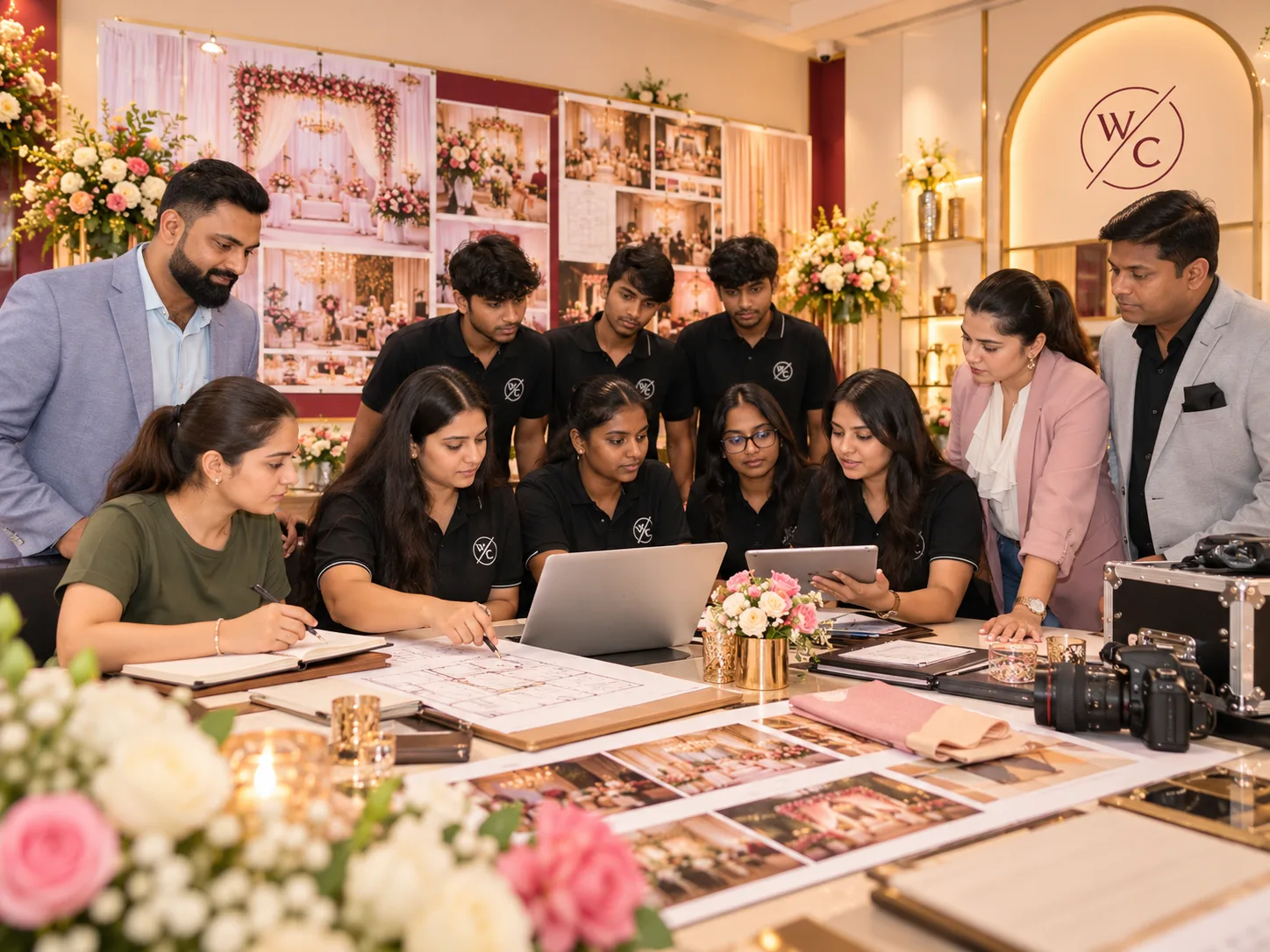
A successful Vendor Management Event is never managed by one person alone. Behind every wedding, corporate event, exhibition, conference, or celebration, there are several vendors working together to make everything happen smoothly.
This is where Vendor Management in Event Planning becomes important. Event planners need to find suitable vendors, compare their services, discuss budgets, confirm requirements, manage timelines, and coordinate everyone during the event.
Vendor Management in Event Planning refers to the process of selecting, coordinating, communicating with, and managing different suppliers involved in an event.
| Vendor Type | Typical Responsibility |
| Décor Vendor | Stage, flowers, themes and venue styling |
| Caterer | Food, beverages and service staff |
| Photographer | Event photography and coverage |
| Videographer | Event films and video coverage |
| Entertainment | DJs, singers, artists and performers |
| Production Team | Sound, lights, LED screens and technical setup |
| Hospitality Team | Guest assistance and coordination |
| Transportation | Guest transfers and logistics |
| Printing Vendor | Invitations, signage and event stationery |
| Rental Vendor | Furniture, tables, chairs and other equipment |
The event planner acts as a connecting point between the client and these different teams.
Imagine a wedding where the décor team arrives late, the sound system is not ready, and the photographer is waiting for access to the venue.
Even if each vendor is good at their own work, poor coordination can affect the overall event.
Effective vendor coordination helps ensure that everyone understands their responsibilities and timelines.
Event planners usually need to stay in touch with vendors throughout the planning process. Requirements can change, timelines can move, and new information may become available.
| Stage | Vendor Management Activity |
| Initial Planning | Discuss requirements and availability |
| Vendor Selection | Compare quotations and confirm services |
| Pre-Event Planning | Finalize details and timelines |
| Final Meeting | Confirm all requirements |
| Event Day | Coordinate setup and execution |
| Post-Event | Check completion and settle pending matters |
Keeping important information documented can also make coordination easier.
Budget management is one of the most important parts of event planning.
An event planner may be handling several vendors at the same time, so keeping a proper record of quotations, advances, balances, taxes, additional charges, and final payments is useful.
| Budget Area | What to Track |
| Quotation | Original agreed amount |
| Advance | Amount already paid |
| Balance | Remaining payment |
| Additional Cost | Extra requirements |
| Taxes | Applicable taxes |
| Final Settlement | Amount due after completion |
Before confirming a vendor, make sure the quotation clearly explains what is included and what may cost extra.
A client may request additional décor, the guest count may increase, an artist’s timing may change, or the venue may introduce a new requirement.
Instead of relying only on verbal communication, important changes should be confirmed through written messages, emails, updated quotations, or revised schedules.
The event manager or coordinator may need to check whether vendors have arrived, whether setup is progressing, and whether each team is ready according to the event timeline.
| Event Stage | Vendor Coordinator’s Role |
| Vendor Arrival | Check attendance and access |
| Setup | Monitor progress |
| Technical Check | Confirm sound, lights and equipment |
| Guest Arrival | Ensure hospitality teams are ready |
| Main Program | Coordinate with production and entertainment |
| Event Completion | Supervise breakdown |
| Departure | Check venue and equipment handover |
Being organised during these hours can make a major difference to event execution.
Vendor management can become difficult when communication is unclear or responsibilities are not defined.
| Common Challenge | Practical Approach |
| Vendor arrives late | Confirm arrival and setup time in advance |
| Requirement changes | Document and share the updated requirement |
| Budget increases | Confirm additional costs before approval |
| Poor communication | Establish one responsible contact person |
| Technical problems | Conduct checks before the event starts |
| Vendor overlap | Create a detailed event schedule |
| Missing equipment | Use a checklist before setup |
The best approach is usually to identify possible problems before the event rather than waiting for them to happen.
A good event professional needs more than event planning knowledge.
Vendor management also requires communication, negotiation, organisation, and problem-solving skills.
| Skill | Why It Matters |
| Communication | Keeps vendors informed |
| Negotiation | Helps discuss pricing and requirements |
| Organisation | Keeps multiple vendors on track |
| Time Management | Helps manage deadlines |
| Problem Solving | Useful when unexpected issues occur |
| Attention to Detail | Helps prevent small mistakes |
| Relationship Building | Supports long-term professional connections |
These skills can be developed through practical assignments, internships, workshops, and real event exposure.
Students interested in an Event Management Course can develop vendor management skills through practical learning.
Instead of only studying vendor coordination as a theory topic, students can work on assignments involving quotations, vendor comparisons, event checklists, timelines, budgeting exercises, and simulated or live event projects.
At WedCell Institute, practical event management training can help students understand areas such as vendor coordination, budgeting, décor, production, client handling, hospitality, wedding planning, and on-ground event execution.
This kind of practical exposure helps students understand how different event teams work together in a professional environment.
Vendor Management in Event Planning is an important part of successful event execution. From selecting vendors and discussing budgets to coordinating setup and handling last-minute changes, every stage requires clear communication and proper organisation.
The best vendor relationships are built on clear expectations, professional communication, mutual respect, and consistent coordination.
For students entering the event industry, learning vendor management can be a valuable part of developing practical event management skills.
Vendor Management in Event Planning is the process of selecting, coordinating, communicating with, and managing suppliers involved in an event.
It helps event planners coordinate different suppliers, manage timelines, control budgets, communicate requirements, and support smooth event execution.
Depending on the event, vendors can include décor teams, caterers, photographers, entertainment artists, production companies, transportation providers, hospitality teams, and rental suppliers.
Communication, negotiation, organisation, time management, problem-solving, budgeting, and attention to detail are useful skills for managing event vendors.
Yes. Students can learn vendor coordination through classroom concepts, practical assignments, workshops, internships, and live event exposure.