
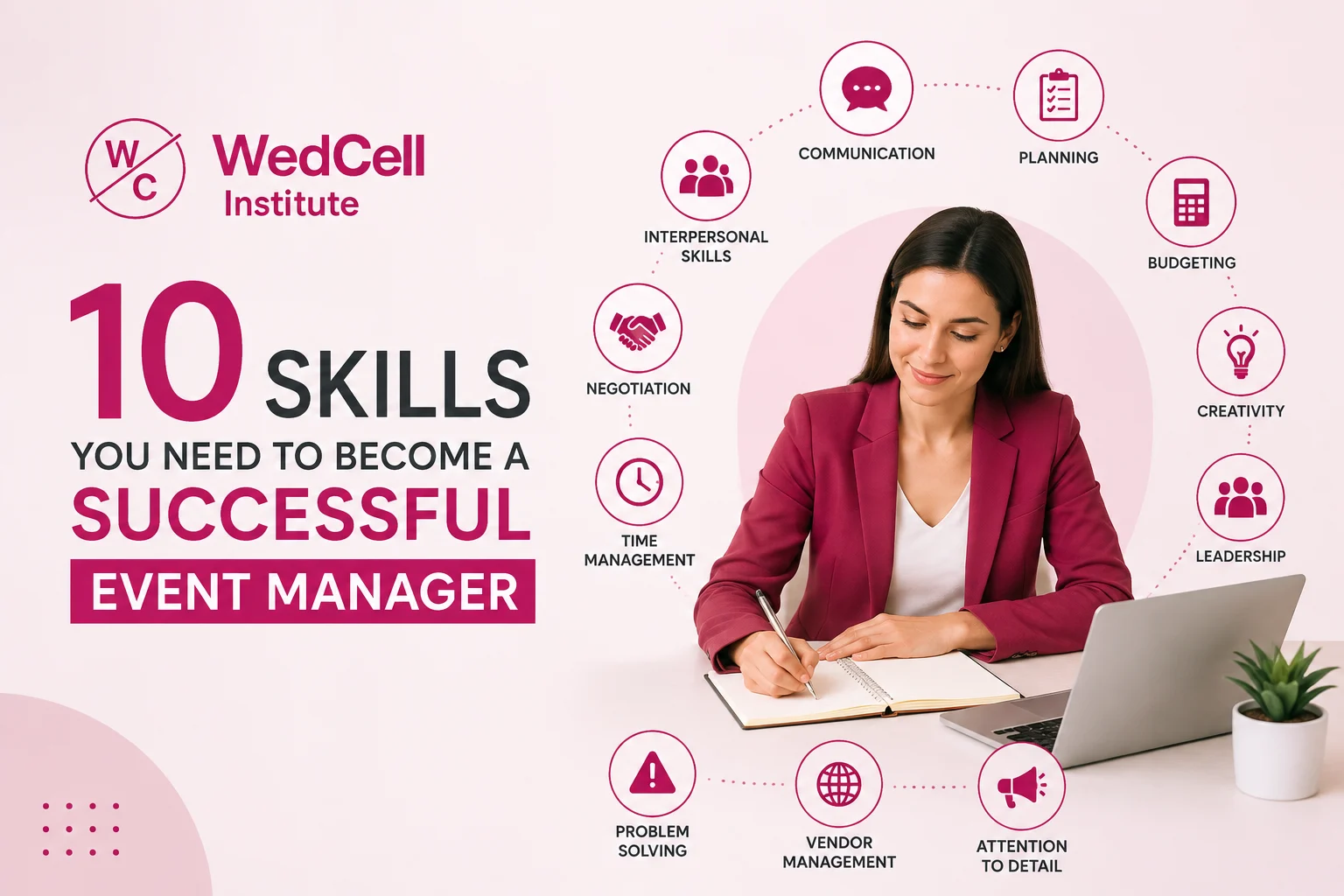
Planning an event may look easy from the outside. You see beautiful decorations, happy guests, good food, music, entertainment and everything running smoothly. But behind that perfect event, there is usually an event manager working quietly to make sure hundreds of small things happen at the right time. Skills to Become an Event Manager .
An event manager has to deal with clients, vendors, guests, budgets, teams and unexpected problems, sometimes all at the same time.
Communication is one of the most important skills for an event manager.
Think about how many people are involved in one event. There can be clients, decorators, caterers, photographers, venue teams, artists, security staff, guests and many others. If communication is not clear, small misunderstandings can quickly become big problems.
Events run according to time.
A wedding ceremony cannot simply start two hours late because the décor team was not ready. A corporate conference cannot keep waiting for an artist or speaker. This is why time management is a major skill for an event manager.
Good time management helps you stay calm when the event becomes busy.
You do not have to become an accountant to work in event management, but you should understand the basics of money.
You need to understand where money should be spent and where costs can be controlled without reducing the quality of the event.
An event manager rarely works alone.
There can be a complete team working behind an event. One person may handle décor, another may manage guests, someone else may coordinate vendors and another person may manage technical requirements.
A good leader does not just give orders. They understand their team’s strengths, assign responsibilities and support people when something goes wrong.
Negotiation is another skill that event managers use almost every day.
A good negotiation should create value for both sides. If you force a vendor to work at an unrealistic price, the quality of service may suffer. Instead, try to understand what the vendor can offer within your budget.
If you want to work in events, you should be ready for unexpected situations.
Maybe the artist is stuck in traffic. Maybe it starts raining during an outdoor event. Maybe the sound system has a technical issue. Maybe a guest has a problem with their seating.
The difference between an inexperienced and experienced event manager is often how they react when something goes wrong.
Instead of panicking, a good event manager quickly looks at the situation, considers the available options and takes action.
Events are experiences, and creativity helps make those experiences memorable.
An event manager may need to develop ideas for themes, décor, guest experiences, stage design, entertainment or event flow.
Sometimes it is the smallest details that make an event feel professional.
Event managers work with many vendors. Building good relationships with them can make future events much easier.
When vendors trust you and understand how you work, communication becomes faster. You also become better at knowing which vendor is suitable for a particular requirement.
Being honest about limitations can create more trust than making big promises that cannot be fulfilled.
Modern event management is becoming more digital.
Event managers may use spreadsheets, project management tools, registration software, digital invitations, social media platforms and presentation software.
You do not need to become a technology expert, but basic digital knowledge can make your work much easier.
Technology can save time and reduce mistakes, especially when you are handling large events.
This skill is often ignored, but it is extremely important.
Event days can be stressful. There may be pressure from clients, vendors, guests and your own team. Sometimes several things can happen at the same time.
This does not mean that you will never feel stressed. It means you learn how to manage it without allowing the stress to affect your decisions.
A plan that worked perfectly for one event may not work for another. You need to adjust according to the venue, audience, budget, weather, client requirements and other conditions.
Reading about event management is useful, but practical experience teaches you things that books cannot always explain.
When you work on an actual event, you learn how vendors communicate, how setup happens, how guests behave and how quickly you sometimes need to make decisions.
Becoming a successful event manager is not about knowing everything from the beginning. It is about being willing to learn, communicate, organise and adapt.
So, if you are interested in becoming an event manager, start learning today. Take small responsibilities, gain practical experience and dont be afraid of mistakes. Every event can teach you something new.
Communication, time management, leadership, budgeting, negotiation and problem-solving are some of the most important skills. Creativity and adaptability are also very useful in handling different types of events.
A degree can be helpful, but practical knowledge and experience are also very important. Courses, internships and hands-on event experience can help beginners understand the industry better.
It can be stressful because events involve deadlines, clients, vendors and unexpected situations. However, good planning, teamwork and stress management can help you handle pressure more effectively.
Start with small events and volunteer opportunities. Learn budgeting, communication, vendor coordination and event planning. Practical experience is one of the best ways to improve your skills.
A successful event manager understands the client’s requirements, plans carefully, manages the budget and team, coordinates vendors and handles problems calmly. Most importantly, they make sure guests have a smooth and enjoyable experience.