
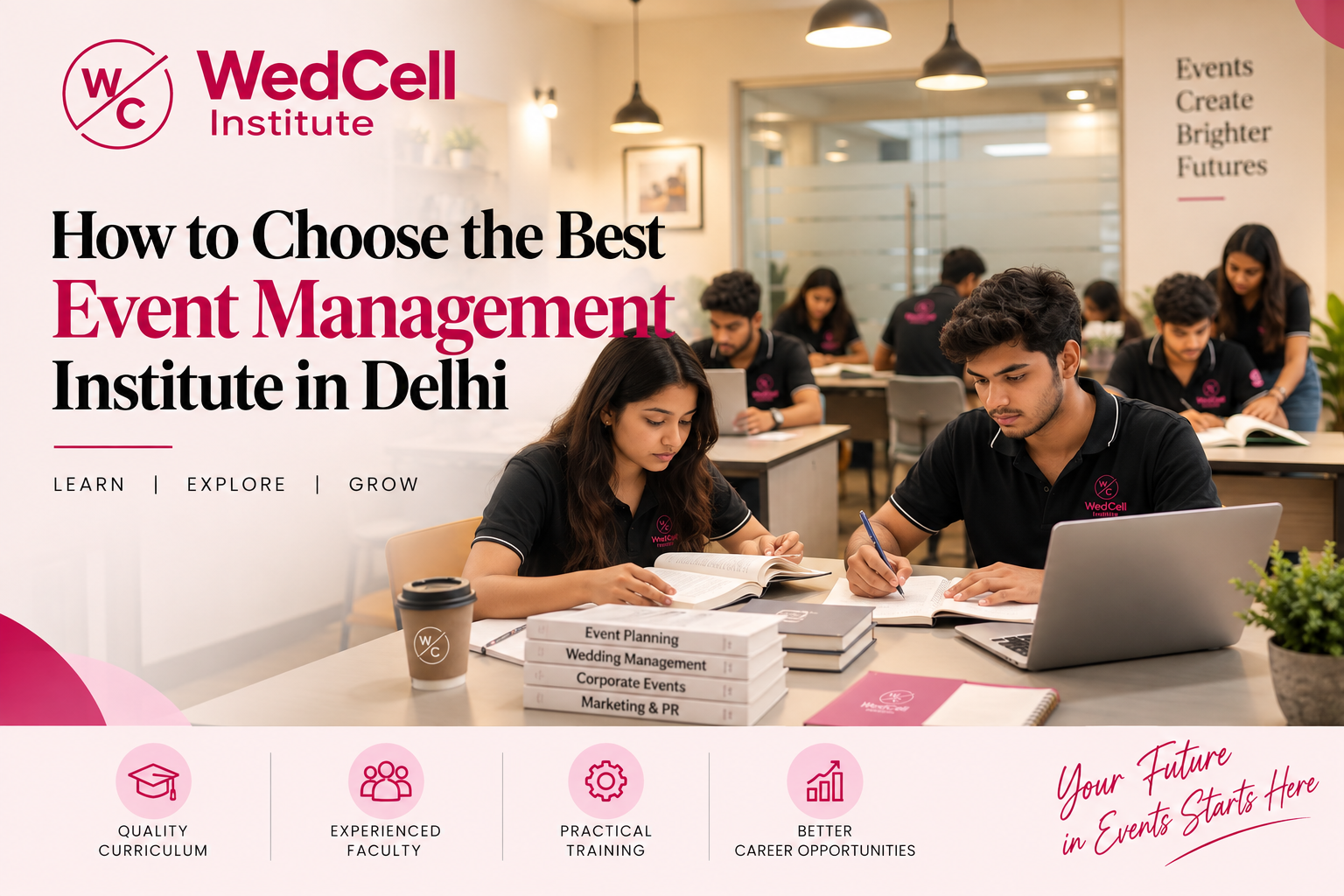
Choosing the right institute can be one of the most important decisions for anyone who wants to build a career in the events industry. Delhi has many institutes offering event management courses, but not every institute provides the same learning experience.
You should look at the curriculum, practical exposure, trainers, internships, industry connections, facilities, and career support before making your decision.
Event management is a practical industry. You may learn concepts such as budgeting, vendor management, décor, production, and guest management in class, but professional events require you to apply these skills in real situations.
| What to Check | Why It Matters |
| Course Curriculum | Shows what you will actually learn |
| Practical Training | Helps you apply classroom knowledge |
| Live Projects | Gives exposure to real event situations |
| Internship | Helps understand professional work culture |
| Trainers | Experienced trainers can provide industry insights |
| Career Support | Can help students prepare for employment |
| Industry Exposure | Helps students understand current practices |
| Portfolio Opportunities | Gives you work to showcase professionally |
A good event management course should cover more than basic event planning. Students should ideally learn about budgeting, venue management, décor, production, vendor coordination, hospitality, client servicing, marketing, and event execution.
For students interested in weddings, the curriculum may also include wedding planning, destination weddings, entertainment, guest management, and wedding production.
Events are not always predictable. A vendor may arrive late, the schedule may change, or a technical problem can appear suddenly. These situations are difficult to understand through theory alone.
A strong event management training program should give students opportunities to practice planning and coordination.
Practical assignments, simulations, workshops, and real projects can help students become more comfortable with event responsibilities.
During an internship, you may learn how event companies communicate with clients, prepare schedules, coordinate vendors, manage teams, and handle event-day responsibilities.
When comparing institutes, check whether internships are part of the program and understand what kind of internship support is provided.
Look for trainers who understand event planning and can connect classroom concepts with practical examples.
Industry experience can be particularly useful because event management involves situations that cannot always be explained through textbooks.
You should also consider whether the institute provides guest lectures, workshops or sessions with working professionals.
The event industry changes continuously. New technologies, event formats, entertainment concepts, décor styles, and marketing methods keep developing.
These experiences can help you understand what employers may expect from entry-level event professionals.
Looking at the complete value of the program is better than simply comparing prices.
Ask what facilities are available for practical learning.
Students may benefit from training related to event production, presentations, décor concepts, registration systems, planning software and other event-related activities.
The facilities don’t have to be extremely expensive. What matters is whether they actually support learning.
Before choosing an institute, check whether it has experience with different types of events.
Look at photographs, videos and project examples where available.
This can help you understand whether students are exposed to weddings, corporate events, exhibitions, conferences, social celebrations or other formats.
Modern events use technology in many ways.
Registration systems, digital invitations, event apps, presentation equipment, social media and virtual platforms are now part of many events.
Ask whether the institute introduces students to current event technology and digital tools.
Understanding technology can help beginners become more adaptable.
Students interested in corporate events should check whether the course includes conferences, seminars, exhibitions, product launches, award ceremonies and business meetings.
Corporate events often have different requirements compared with social celebrations, especially when it comes to branding, schedules, client communication and professional protocols.
If you are choosing an institute in Delhi, visiting the campus can be useful.
Look at the classrooms, training areas, equipment, learning environment, and overall facilities.
You can also speak with the admission team and ask questions about the course.
A campus visit can help you understand whether the institute feels suitable for your learning style. When comparing an event management institute in Delhi, consider how easily you can reach the campus.
Knowing How to Choose the Best Event Management Institute in Delhi is not about finding the institute with the biggest advertisement or the longest course brochure.
Focus on practical learning, live event exposure, internships, experienced trainers, industry connections, career support, and opportunities to build your portfolio.
Take your time before enrolling. Compare different programs, visit campuses, ask questions, speak with students when possible, and understand exactly what the course provides.
For someone starting a career in event management, the right learning environment can provide a strong foundation. But remember, your growth will also depend on how much you practice, participate, learn from mistakes, and make use of every real-world opportunity.
Compare the curriculum, practical training, live projects, internships, trainers, industry exposure, career support, student reviews, facilities, and course value.
Yes. Practical training helps students understand how planning, vendor coordination, guest management, budgeting, production, and event execution work in real situations.
It depends on your career goals and available time. A certificate may suit beginners looking for focused learning, while a diploma can provide broader training.
Important areas can include event planning, budgeting, vendor management, client servicing, décor, production, hospitality, marketing, logistics, and event execution.
Yes. A course that includes wedding planning, décor, hospitality, vendor coordination, budgeting, production, and practical wedding projects can help you develop relevant skills for this career path.