
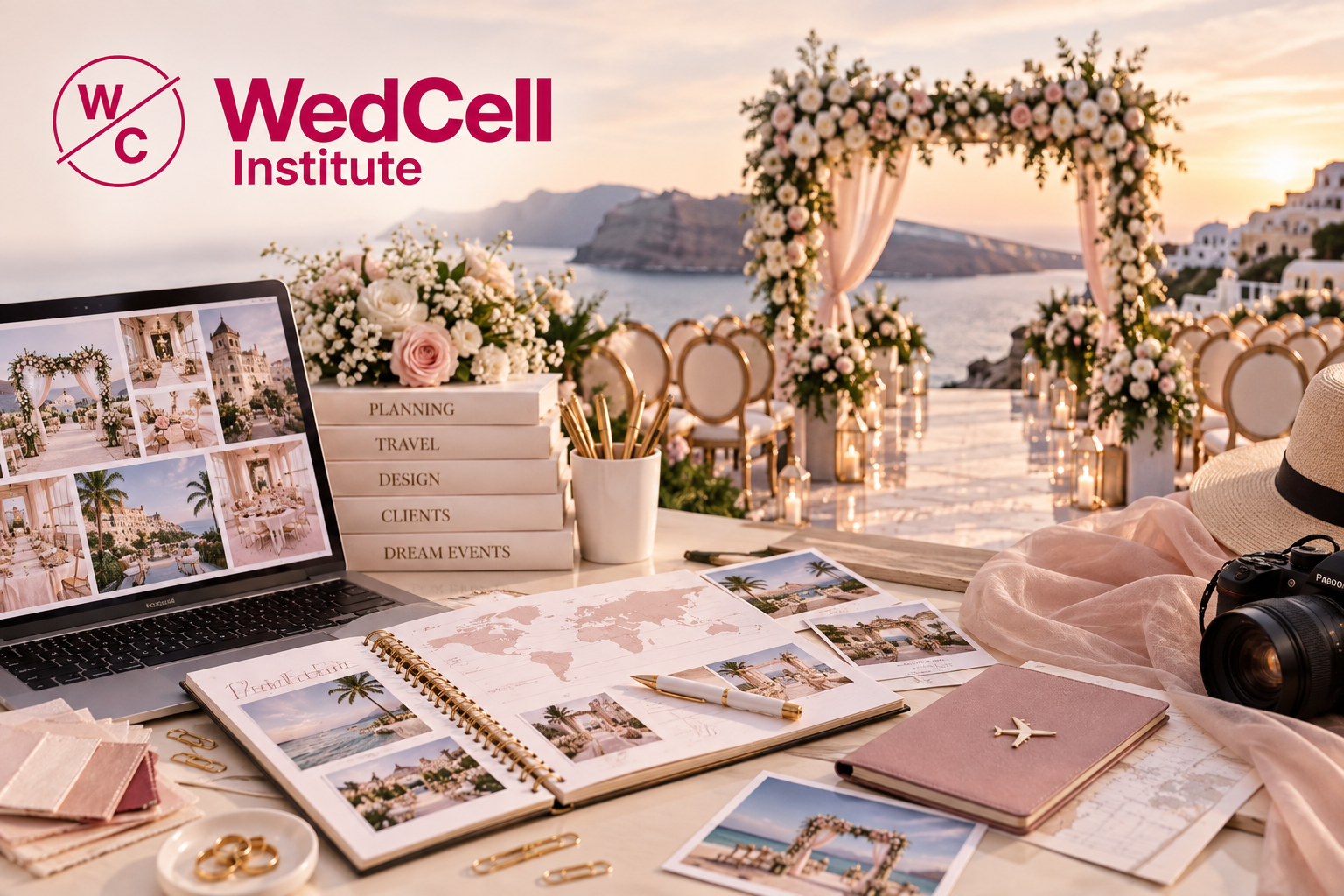
Luxury and destination weddings are becoming more experience-focused. Couples are not only looking for a beautiful wedding venue. They want thoughtful décor, Destination Wedding Planning , excellent hospitality, unique locations, smooth guest experiences, and moments that feel personal.
A career in this field can be exciting, but it also needs strong planning skills and practical knowledge. Luxury weddings involve many details, and even a small mistake can affect the guest experience.
Luxury wedding planning focuses on creating premium and personalized wedding experiences. Destination wedding planning adds another level because the wedding takes place away from the couple’s home city.
The planner may need to manage travel, accommodation, venues, vendors, décor, hospitality, entertainment and multiple wedding functions.
| Area | What a Planner May Handle |
| Venue | Hotel, resort, palace or private property |
| Décor | Theme, flowers, stage and venue styling |
| Hospitality | Guest welcome, rooms and services |
| Travel | Flights, transfers and transportation |
| Catering | Menus, tastings and food service |
| Entertainment | Artists, DJs and performances |
| Production | Sound, lighting, stage and technical setup |
| Guest Experience | Activities, welcome events and coordination |
The work is detailed, but that is also what makes it interesting.
Décor is an important part of luxury weddings. Clients may expect personalized concepts rather than standard setups.
A luxury wedding planner should understand colour combinations, floral arrangements, furniture, lighting, stage design, table styling and entrance décor.
At the same time, luxury doesn’t always mean adding more decoration. Sometimes a clean and elegant setup can look more premium than an overcrowded design.
Destination weddings involve additional planning because guests are travelling to another location.
The planner may coordinate with hotels, transport teams, local vendors and venue staff.
A delay in transportation, missing room allocation or poor guest communication can create stress, so destination wedding planners need to be highly organized.
Depending on the wedding, you may work with decorators, photographers, makeup artists, caterers, production companies, entertainment agencies, florists, transportation providers and hospitality teams.
Good relationships with vendors can make communication easier and help planners understand what is possible at different venues and budgets.
However, beginners should not choose vendors only because they are popular. Quality, reliability, communication and previous work also matter.
Reading about luxury weddings can teach you the basics, but live events teach you how the industry actually works.
Beginners should look for internships, live projects, event assignments and opportunities to assist experienced wedding planners.
During a real wedding, you may learn how vendors coordinate, how guest arrivals are managed, how décor is installed and how the team handles last-minute changes.
For students interested in a career in wedding planning, practical exposure can be one of the most useful learning experiences.
Destination wedding planners should understand different types of locations.
India offers many wedding destinations, from beach resorts and heritage properties to luxury hotels and mountain locations.
International destinations can also be explored as your experience grows.
Each destination has its own weather, travel requirements, local vendors, venue restrictions and logistical challenges.
The more familiar you become with different destinations, the better you can plan suitable experiences.
A flight may be delayed. A vendor may have a technical problem. Weather can change an outdoor plan. A guest may require special assistance.
A good planner should stay calm and focus on finding solutions.
This is one reason practical wedding planning training can be valuable. It allows beginners to understand different situations before they are responsible for major events.
If you are serious about building a career in this field, professional training can provide a structured starting point.
WedCell Institute offers event and wedding planning-focused courses covering areas such as wedding planning, budgeting, décor, vendor management, hospitality, production and practical event exposure.
Training can help beginners understand the industry before they start handling professional responsibilities.
The wedding industry depends heavily on professional relationships.
Start connecting with photographers, decorators, hotels, caterers, makeup artists, entertainers, production teams and other wedding professionals.
Attend wedding exhibitions, workshops and industry events where possible.
Your network can help you learn about new trends, vendors and career opportunities.
Wedding styles continue to change. New décor ideas, entertainment formats, guest experiences and technology are introduced regularly.
Follow wedding publications, planners, venues and décor professionals to understand current trends.
But don’t copy every trend. A good wedding planner knows how to select ideas that suit the couple instead of simply following what is popular.
Learning How to Build a Career in Luxury & Destination Wedding Planning starts with developing strong event management fundamentals and then gaining specialized experience.
Luxury wedding planning requires creativity, organization, communication, hospitality, budgeting and problem-solving. Destination weddings add travel and logistics to the mix, making proper coordination even more important.
For beginners, the best approach is to learn the basics, gain practical exposure, build a vendor network and create a strong portfolio.
You don’t need to know everything from day one. With consistent learning and real event experience, your interest in weddings can gradually become a professional career.
Start by learning event and wedding planning fundamentals, gaining practical experience through internships or live projects, building a portfolio and developing professional industry connections.
Planning, communication, budgeting, hospitality, vendor coordination, time management, creativity and problem-solving are important skills for destination wedding professionals.
It is not the only route, but professional training can help beginners understand the planning process and develop practical skills in a structured way.
A destination wedding planner may manage venues, guest travel, accommodation, transportation, vendors, décor, hospitality, entertainment, timelines and on-ground wedding execution.
Internships, live wedding projects, event volunteering, practical assignments and assisting experienced wedding planners are useful ways to gain experience.