
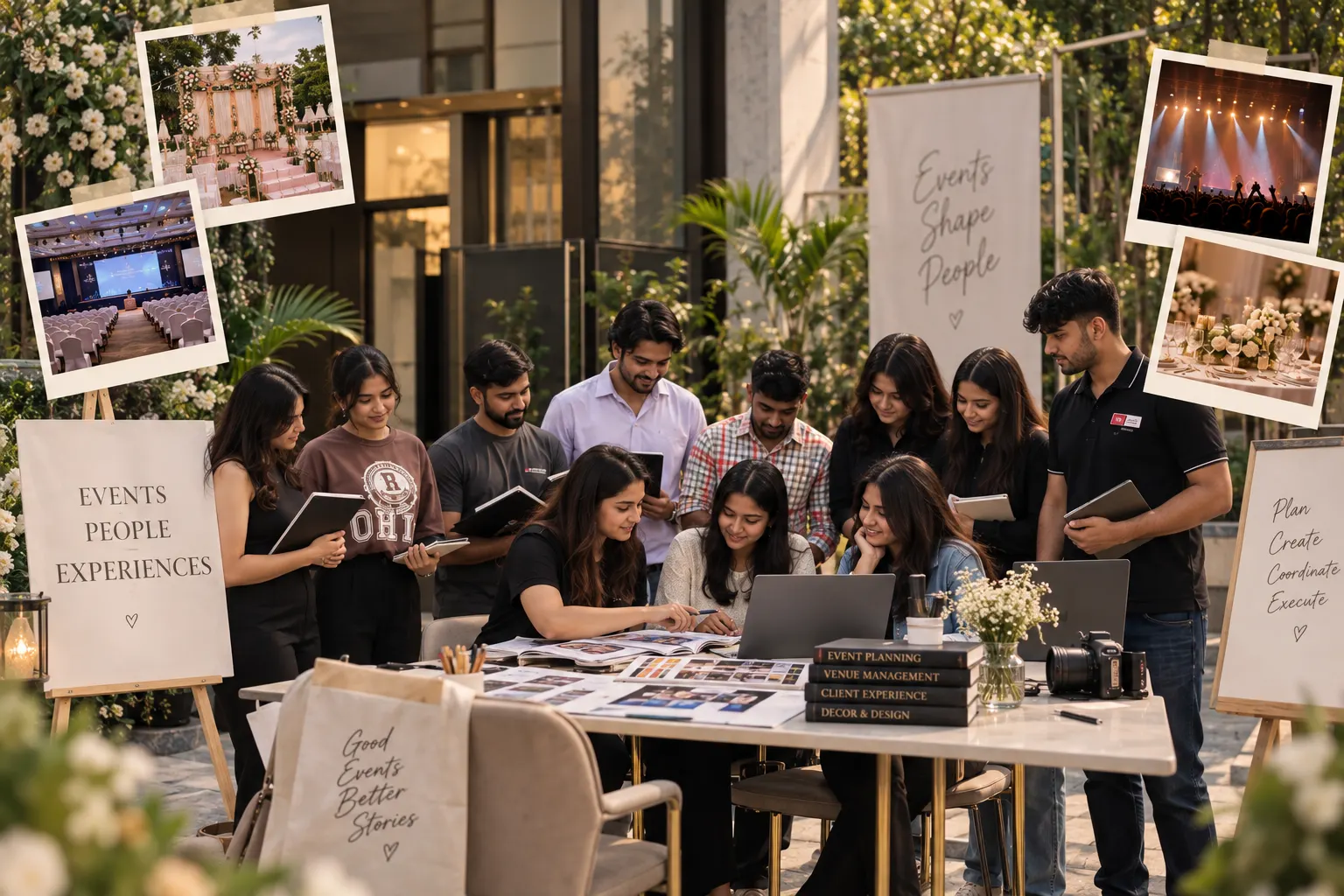
Event management is a field where no two days are exactly the same. One day you may be planning a wedding, while the next project could be a corporate conference, product launch or music event. Types of Events Every Event Management Student Should Know.
For students entering this industry, understanding different types of events is important because every event has its own planning style, audience, budget and challenges.
Event management is a broad industry. Learning only one type of event may limit your understanding of how the industry works.
Different events teach different skills. A wedding can teach guest management and décor coordination, while a corporate conference can teach professional communication, scheduling and technical production.
| Event Type | Main Skills Students Can Learn |
| Weddings | Décor, hospitality, guest management |
| Corporate Events | Professional planning and coordination |
| Conferences | Scheduling and speaker management |
| Product Launches | Branding and marketing |
| Exhibitions | Stall management and logistics |
| Concerts | Production and crowd management |
| Social Events | Entertainment and guest experience |
| Destination Events | Travel and hospitality coordination |
Weddings are one of the most detailed types of events in the industry. They may involve several functions such as engagement, mehendi, sangeet, haldi, wedding ceremony and reception.
Students can learn about décor, entertainment, guest hospitality, vendor coordination, transportation and event timelines.
Corporate events are organised by companies for employees, clients, business partners or industry professionals.
Students can learn professional communication, event budgeting, presentations, branding, production and client handling.
Corporate events generally require a structured schedule and clear communication between different teams.
Conferences and seminars focus mainly on knowledge sharing, discussions and professional networking.
They may include keynote speakers, panel discussions, presentations, workshops and networking sessions. For students interested in corporate event management, conferences can provide valuable practical exposure.
A product launch is designed to introduce a new product or service to customers, media, influencers or business partners.
These events usually combine event planning with marketing and branding.
The stage, presentation, lighting, product display and guest experience need to support the brand message.
Award ceremonies are organised to recognise employees, professionals, students, artists or organisations.
They require careful planning because many activities happen according to a fixed sequence.
Students can learn stage management, backstage coordination, award distribution and guest management through this type of event.
Exhibitions bring multiple brands, exhibitors and visitors together in one location.
Each exhibitor may have different requirements for stall design, electricity, branding, furniture and technology.
An event management student can learn about floor planning, exhibitor coordination, logistics, registration and crowd movement.
Concerts are highly dependent on production and technical coordination.
Sound, lighting, stage design, artist management, security and crowd management all need to work together. Students interested in entertainment event management can learn a lot from live music events.
Models, designers, makeup artists, photographers, backstage teams, music and lighting all need to coordinate properly.
Students can learn backstage management, show flow, production coordination and time management.
The event team often needs to work behind the scenes while maintaining a smooth experience for the audience.
Birthday parties, anniversaries, family celebrations, engagement parties and private dinners also require event planning.
These events teach students about personalisation, entertainment, décor and understanding individual client preferences.
College festivals, seminars, competitions, cultural programs and graduation events provide excellent learning opportunities for beginners.
Students may have to manage registrations, volunteers, performances, guest speakers, stage activities and crowd movement.
Because these events often involve students themselves, they can provide practical experience in teamwork and leadership.
One of the biggest advantages of studying multiple event types is that students develop a wider skill set.
| Skill | Events Where It Is Commonly Used |
| Vendor Management | Weddings, exhibitions, conferences |
| Guest Management | Weddings, corporate events, conferences |
| Production | Concerts, conferences, award shows |
| Décor | Weddings, social events, celebrations |
| Branding | Product launches, corporate events |
| Logistics | Destination events, exhibitions |
| Artist Management | Concerts, weddings, festivals |
| Client Handling | Almost every event type |
| Budgeting | Every professional event |
| Crisis Management | Large and complex events |
Your interest can help guide your specialisation. If you enjoy creativity and décor, wedding and social events may interest you. If you prefer structured professional environments, corporate events and conferences may be suitable areas to explore.
The best approach during your learning stage is to experience different event formats before deciding where you want to specialise.
Reading about events is useful, but practical exposure teaches things that a classroom cannot fully explain.
During a live project, students may experience last-minute changes, vendor delays, guest requests and technical problems.
A practical event management course that includes live projects, workshops and internships can help students connect classroom concepts with real event execution.
Understanding the Types of Events Every Event Management Student Should Know gives students a better picture of how broad the event industry really is.
Every event brings a different set of requirements. A wedding may teach detailed guest and vendor coordination, while a conference may develop professional scheduling and production skills. A concert can introduce students to stage and artist management, while an exhibition can teach logistics and exhibitor coordination.
Event management is a practical industry. Learn the concepts, participate in real projects, observe experienced professionals and keep improving with every event.
Major event categories include weddings, corporate events, conferences, exhibitions, product launches, concerts, fashion shows, social events, destination events, festivals and networking events.
Beginners can start by understanding common event formats such as weddings, corporate events, conferences, exhibitions and social events. Learning different formats provides a broader understanding of the industry.
Students can develop communication, budgeting, vendor coordination, guest management, teamwork, time management, production and problem-solving skills.
Yes. Wedding planning is one area students can explore as a specialisation. It involves décor, hospitality, vendor coordination, guest management, budgeting and event execution.
Practical training can help students understand how event plans are executed in real situations. Live projects and internships can also help build confidence and a professional portfolio.