
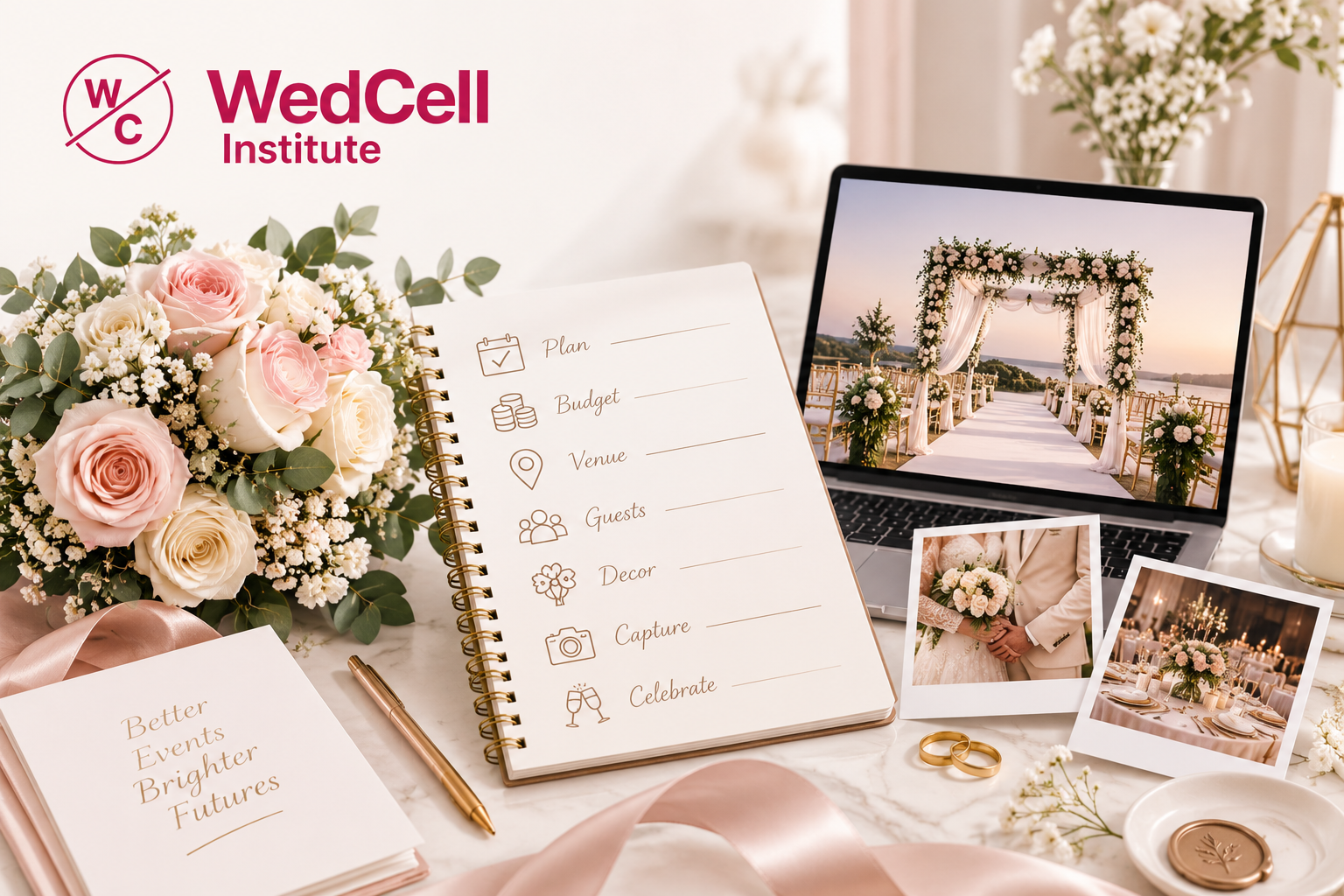
Planning a wedding can feel exciting in the beginning, but once the actual planning starts, there can be a lot of things to manage. Venue, budget, guests, décor, catering, photography, outfits, entertainment and many small details all need attention. How to Plan a Wedding From Start to Finish: A Beginner’s Guide
The good thing is that wedding planning becomes much easier when you divide the process into simple steps. You don’t need to plan everything in one day. Start with the basics, create a timeline and take each decision one by one.
Before contacting vendors, think about what kind of wedding you actually want.
| Wedding Style | Possible Features |
| Traditional | Cultural rituals, traditional décor and ceremonies |
| Modern | Minimal décor, contemporary styling and entertainment |
| Destination | Resort venue, travel and guest accommodation |
| Intimate | Smaller guest list and personalized arrangements |
| Luxury | Premium décor, hospitality, entertainment and production |
You don’t have to copy someone else’s wedding. The best wedding plan is one that feels right for the couple and their families.
It is easy to get carried away after seeing beautiful wedding décor or expensive venues online. But every wedding has a limit, so decide your approximate budget before making major bookings.
Keep a small amount aside for unexpected expenses. Some costs can change during the planning process.
The number of guests affects your venue, food, accommodation, seating and overall budget.
Start with a rough guest list instead of trying to make it perfect immediately. You can divide guests into family, friends, colleagues and other important people.
Once you have an approximate number, choosing a suitable venue becomes much easier.
Your wedding date and venue are major decisions. Popular venues can get booked months in advance, especially during busy wedding seasons.
When selecting a venue, consider the following:
| Factor | Why It Matters |
| Capacity | Should comfortably accommodate your guests |
| Location | Easy for guests to reach |
| Parking | Useful for local and family guests |
| Catering | Check menu and service options |
| Décor rules | Some venues have restrictions |
| Rooms | Important for outstation guests |
| Production | Check sound, lighting and stage possibilities |
Visit the venue personally before making the final booking whenever possible.
This may include your wedding planner, decorator, photographer, makeup artist, caterer, entertainment team, invitation designer and production company.
Don’t select a vendor only because their social media page looks attractive. Check their previous work, reviews, pricing, availability and communication style.
A good vendor should understand your requirements and explain what is included in their package.
Décor is one of the most visible parts of a wedding. Your theme can be based on colours, flowers, cultural elements, a particular style or even the venue itself.
Think about the complete guest experience instead of only the stage.A simple theme can also look beautiful when the details are planned properly.
Your invitations should clearly communicate the wedding date, venue, event timings and other important information.
For multiple wedding functions, consider creating a simple schedule for guests.
Digital invitations can also make it easier to share location details, updates and reminders.
A detailed timeline helps everyone understand what should happen and when.
The schedule should include vendor arrival, décor setup, makeup, photography, guest arrival, ceremonies, performances, food service and other important activities.
Share the final timeline with the relevant vendors and family members before the wedding day.
A wedding is not only about how the venue looks. Guests should also feel comfortable throughout the event.
Think about seating, food, directions, parking, hospitality, washrooms, accommodation and transportation.
Small things such as clear signage and someone available to answer guest questions can make the experience much smoother.
If you have outstation guests, accommodation should be planned well in advance.
Consider the hotel’s location, room availability, check-in and check-out timings, breakfast options and transportation.
Create a simple guest room list so that the family or hospitality team knows who is staying where.
Planning a wedding requires more than creativity. It involves budgeting, communication, vendor management, guest coordination, logistics and problem-solving.
This is why professional wedding planning training can be useful for people who want to make wedding management their career.
Students interested in learning the professional side of wedding planning can explore courses and practical training at WedCell Institute.
Practical exposure can help aspiring planners understand what actually happens during real wedding projects.
Learning How to Plan a Wedding From Start to Finish becomes much easier when you follow a proper process.
Start with your vision and budget, prepare the guest list, book the venue, select reliable vendors, plan décor, organize guest communication and create a detailed wedding-day timeline. Most importantly, leave some room for unexpected situations.
Wedding planning can be busy, but it can also be one of the most rewarding experiences when everything comes together.
The goal isn’t to make every single detail perfect. The goal is to create a celebration where the couple and their guests can enjoy the moment and create memories together.
The first step is usually deciding your wedding vision, approximate guest count and budget. These three things help guide most of your later decisions.
It depends on the size and type of wedding. Starting several months in advance gives you more time to compare venues, vendors and other services.
Common vendors include the venue, caterer, decorator, photographer, makeup artist, entertainment team and production team. The exact requirements depend on your wedding.
Create a detailed budget before making major bookings and divide the money across different wedding requirements. Keeping a contingency amount is also a smart idea.
A wedding planner can be helpful when there are multiple functions, many vendors, large guest numbers or complicated logistics. They can handle coordination and help reduce pressure on the couple and family.