Planning a wedding or a big event can look very exciting from the outside. Beautiful décor, happy guests, music, food and those picture-perfect moments are what everyone notices. But behind all this, there is a lot of planning, coordination and problem-solving happening quietly. If you are thinking about a career in the Wedding Planner and event industry, understanding this difference is also important. It can help you decide which career path suits your personality and interests better.
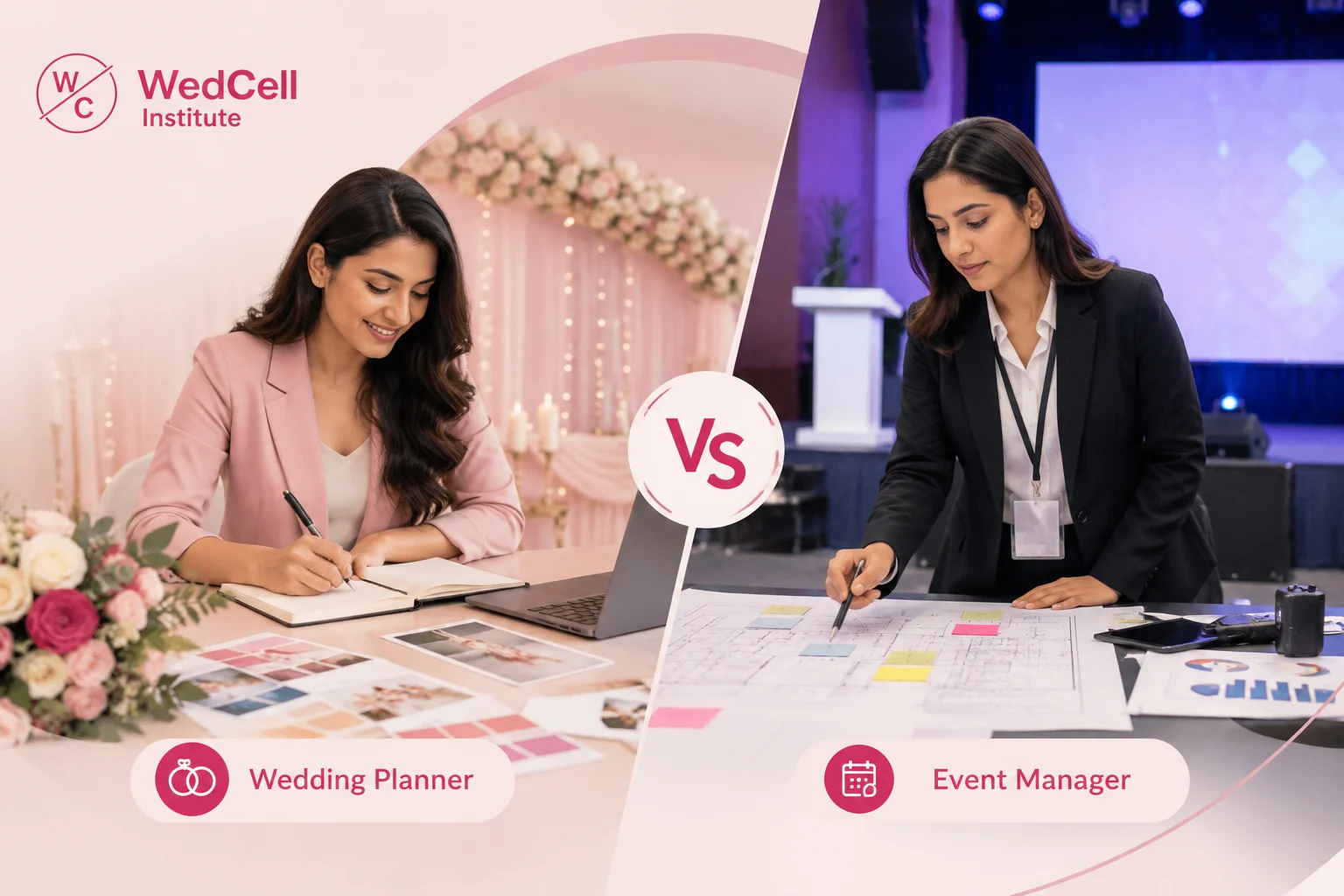
A wedding planner mainly focuses on weddings and related celebrations. They work closely with the couple and family to understand their ideas, budget, preferences and expectations. From selecting vendors to planning functions and managing décor details, a wedding planner is often involved throughout the wedding journey.
So, a wedding planner is generally more specialised, while an event manager can have a broader area of work.
| Wedding Planner | Event Manager |
| Mainly works on weddings | Works across different event categories |
| Closely works with couples and families | Works with clients, companies, brands and organisations |
| Focuses on wedding details and celebrations | Focuses on overall event planning and execution |
| Handles wedding vendors and functions | Handles vendors, teams, logistics and event operations |
| Strong focus on décor, ceremonies and guest experience | Strong focus on planning, operations and execution |
| Usually manages wedding-related timelines | Can manage timelines for many event formats |
Of course, real-world responsibilities can overlap. Some professionals may call themselves both wedding planners and event managers.
A wedding is rarely just one event. In India especially, weddings can include several functions such as engagement ceremonies, haldi, mehendi, sangeet, wedding ceremonies and receptions. Each function can have a different theme, guest list, venue and schedule.
| Wedding Planning Area | Typical Responsibility |
| Venue | Shortlisting and coordinating with venues |
| Budget | Planning and tracking wedding expenses |
| Décor | Discussing themes, colours and setup |
| Vendors | Finding and coordinating suppliers |
| Guest management | Supporting guest-related arrangements |
| Timeline | Creating schedules for wedding functions |
| Ceremonies | Coordinating rituals and function requirements |
| Entertainment | Coordinating DJs, performers or artists |
| Photography | Managing schedules with photography teams |
| On-day management | Making sure planned details happen properly |
A wedding planner also needs good people skills. Weddings can be emotional and sometimes stressful for families. A planner has to stay calm even when five different people are asking for something at the same time.
That is not always easy, but it’s a big part of the job.
You don’t necessarily need to wait until you know everything before entering the industry.
A good starting point is to learn the fundamentals through an event management course or wedding planning course.
Training can help you understand areas that may be difficult to learn by simply watching events from the outside.
You can learn about budgeting, vendor management, event décor, client communication, event timelines, logistics and event execution.
Practical exposure is also extremely useful. Even assisting with smaller events can teach you things that a classroom cannot fully explain.
For example, you may learn how important timing is when a vendor is running late. You may understand why backup plans matter after seeing a weather problem affect an outdoor event.
You can read about event planning for months, but eventually you need to understand how those plans work in real situations.
Industry-focused training can help aspiring professionals develop confidence before entering the workplace.
At WedCell Institute, students interested in wedding and event management can learn about the different areas involved in professional event planning, from creative concepts and décor to vendor coordination, budgeting and event execution.
For someone considering a career in this field, structured learning can provide a useful foundation.
If you’re still confused, don’t worry. Think about the kind of work you would actually enjoy doing.
If you imagine yourself sitting with a couple, creating their dream wedding theme, visiting venues, selecting décor and coordinating wedding functions, wedding planning may be your direction.
If you imagine yourself managing conferences, exhibitions, corporate events, launches and large-scale productions, event management might be a better fit.
The wedding and events industry is broad enough to offer different paths, and your first job doesn’t have to decide your entire career.
A wedding planner generally specialises in weddings and related celebrations, while an event manager can work across different types of events such as corporate events, exhibitions, conferences, parties and weddings.
Yes. Event management skills such as budgeting, logistics, vendor coordination and client handling are useful in wedding planning. An event manager can develop specialised wedding knowledge and move into wedding planning.
Yes, wedding planning can be considered a specialised area of event management. However, wedding planning has its own specific requirements involving ceremonies, family expectations, wedding traditions, décor and multiple functions.
Neither career is automatically better. Wedding planning may suit people who enjoy weddings, décor and working closely with couples, while event management can suit people who enjoy broader event categories, operations, logistics and corporate projects.
A recognised or industry-focused event management or wedding planning course can help you develop fundamental skills. Look for training that covers planning, budgeting, vendor coordination, client handling, décor, logistics and practical event execution.
The difference between a Wedding Planner vs Event Manager is mainly about focus.
A wedding planner usually specialises in weddings and works closely with couples and families to create and manage their celebrations. An event manager generally has a broader role and can handle many types of events, from corporate conferences to exhibitions, launches, parties and sometimes weddings.
Learn the skills. Gain experience. Plan memorable experiences. Build your career in the wedding and event industry.