The event industry is built on execution, experience, and exposure. While creativity and planning are essential, success in this field depends largely on how well you can perform on-ground during live events. This is why students today are actively searching for an event management degree with 100% practical training.
But not all institutes deliver what they promise. Many courses talk about practical exposure, yet focus heavily on theory. So how do you identify a program that truly prepares you for the real event industry?
This guide explains what to look for in an event management degree with 100% practical training, so you can make the right career decision.
Event management is not a desk-based profession. It involves:
Live coordination
Real-time problem solving
Vendor and client handling
Team leadership under pressure
No amount of classroom theory can fully prepare you for the realities of weddings, corporate events, exhibitions, or large-scale productions. A degree that prioritizes practical learning ensures students are industry-ready from day one.

The first and most important thing to look for is actual live event exposure.
A genuine event management degree with 100% practical training should offer:
Participation in real weddings and corporate events
On-ground roles during setup, execution, and wrap-up
Exposure to different types of events
Avoid programs that limit practical learning to case studies, presentations, or simulations. Real events teach lessons that no classroom can replicate.
Some institutes allow students to “observe” events but don’t involve them in execution. That’s not enough.
Look for programs where students:
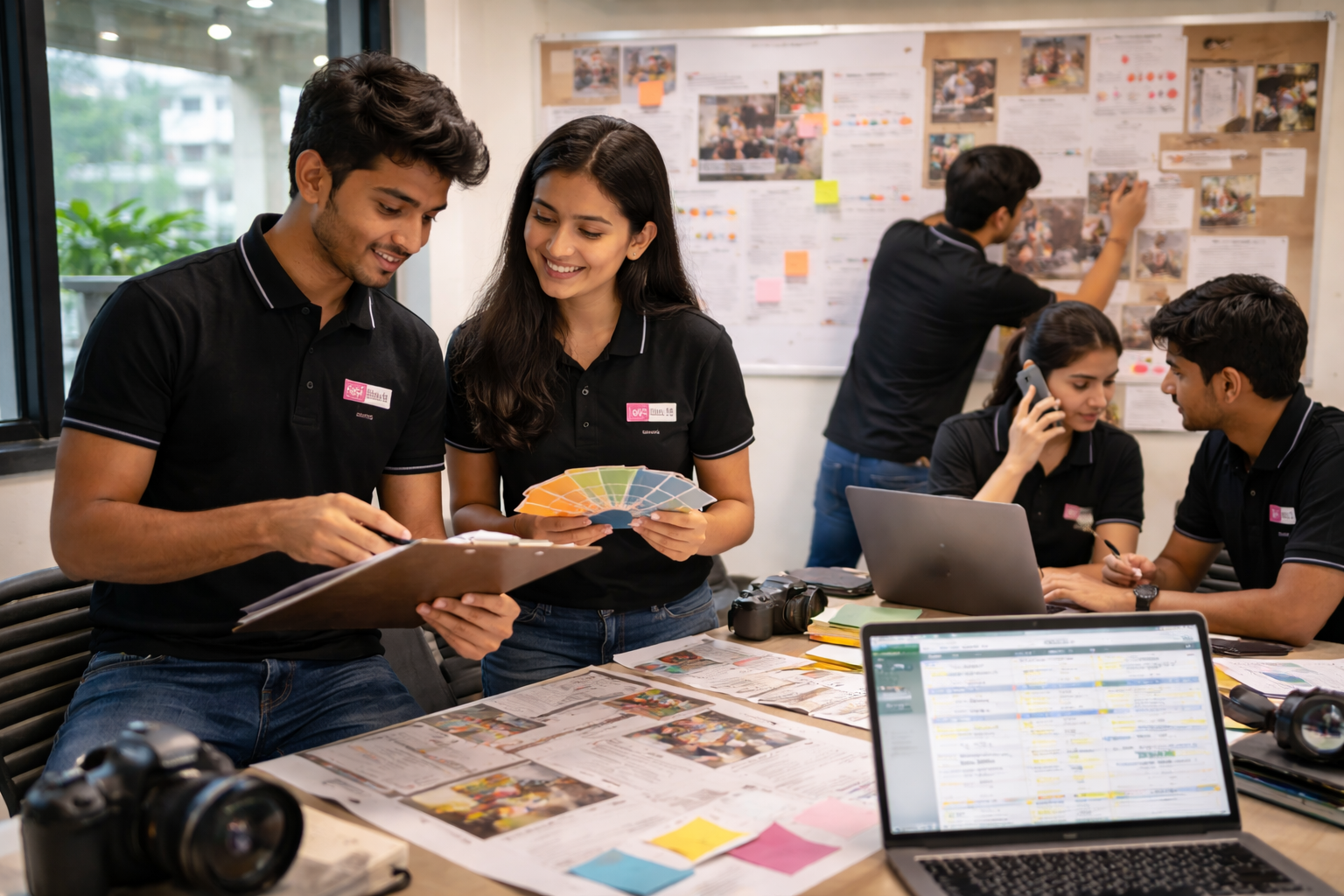
Coordinate vendors
Assist in décor and production
Handle guest management
Support logistics and operations
True practical training means doing the work, not just watching others do it.
Practical training is only effective when guided by professionals who have worked in the industry.
An ideal event management degree program should have:
Trainers with real event execution experience
Mentors who understand industry challenges
Faculty who teach from real-life scenarios
Learning from working professionals helps students understand industry expectations, work ethics, and real-time decision-making.
While practical training is critical, theory still plays an important role. The key is balance.
A strong program integrates:
Event planning theory with live projects
Budgeting concepts with real event costing
Client handling lessons with actual client interactions
Avoid programs that teach theory in isolation without linking it to real-world application.
The event industry is diverse. A quality event management degree with 100% practical training should expose students to multiple event formats, such as:
Weddings and social events
Corporate conferences and product launches
Brand activations and exhibitions
Cultural and entertainment events
This helps students discover where their strengths and interests lie.
Internships are a key component of practical learning—but only if they are meaningful.
Check whether the degree offers:
Structured internships with clear learning outcomes
Internships with reputed event companies
On-ground responsibilities instead of desk tasks
A strong internship bridges the gap between training and professional work.
Event management is a client-driven industry. Students must learn how to:
Understand client requirements
Manage expectations
Handle last-minute changes
A degree with 100% practical training should give students opportunities to interact with real clients under supervision.
Execution is where events succeed or fail. Look for programs that train students in:
Setup and dismantling processes
Team coordination on-site
Time and crisis management
Vendor supervision
These skills can only be developed through continuous on-ground exposure.
Practical training isn’t just about physical work—it’s also about attitude and professionalism.
A good program should focus on:
Communication skills
Teamwork and leadership
Discipline and responsibility
Work ethics and adaptability
These qualities define long-term success in the event industry.
Institutes often promise placements, but the quality of placements depends on student readiness.
An event management degree with 100% practical training should offer:
Placement assistance with real event companies
Portfolio-building through live events
Industry networking opportunities
Students with strong practical exposure are more confident and employable.
Before enrolling, be cautious of programs that:
Focus mostly on theory
Offer “practical” learning only on paper
Lack industry-trained faculty
Provide no live event exposure
Always ask for proof—photos, event lists, student testimonials, and alumni outcomes.
This type of degree is ideal for students who:
Prefer hands-on learning
Are creative and energetic
Can handle pressure and flexible hours
Want to work in live environments
Aim to start early in the event industry
If you’re looking for a routine, desk-based career, this may not be the right fit.
Choosing an event management degree with 100% practical training can shape your entire career. The right program doesn’t just teach you about events—it prepares you to manage them confidently in real life.
When selecting a course, look beyond brochures and promises. Focus on live exposure, execution roles, industry mentors, and real-world learning. With the right practical training, you won’t just earn a degree—you’ll build a future in the event industry.