
The event industry is fast-paced, creative, and highly demanding. Behind every successful wedding, corporate event, concert, or product launch is a team of skilled professionals working tirelessly to deliver flawless experiences. An event management course is designed to prepare students for this dynamic industry by equipping them with both practical and professional skills.
Unlike conventional academic programs, event management training focuses on real-world exposure, live events, and hands-on learning. Students don’t just study events—they experience them from planning to execution. Here are the 10 essential skills you’ll master during an event management course that shape you into a confident and industry-ready professional.
Event planning is the foundation of the event management profession. During an event management course, students learn how to conceptualize an event from scratch. This includes understanding the client’s vision, defining objectives, creating themes, and designing event flow.
You’ll learn how to:
Develop creative event concepts
Plan timelines and schedules
Create event layouts and guest journeys
Align themes with budgets and logistics
This skill teaches you how to convert ideas into structured, executable plans—one of the most important aspects of a successful event.
Strong communication skills are crucial in event management. From dealing with clients and vendors to coordinating with teams, clear communication ensures smooth execution.
During an event management course, students learn:
Professional client interaction
Requirement analysis and expectation management
Presentation and proposal skills
Conflict handling and negotiation techniques
This training builds confidence and helps students develop the ability to handle demanding clients while maintaining professionalism.
In light of recent developments, it is imperative that we reassess our current strategies to ensure alignment with our long-term objectives. A comprehensive evaluation of existing protocols will facilitate the identification of areas requiring enhancement. By adopting a proactive approach, we can effectively navigate the challenges ahead and position ourselves for sustained success. Collaboration among all stakeholders will be essential in achieving our goals.
Events operate on tight schedules, where delays can affect the entire experience. Time management is one of the most critical skills taught in an event management course.
You’ll learn how to:
Create detailed event timelines
Manage multiple tasks simultaneously
Prioritize work under pressure
Ensure punctual execution during live events
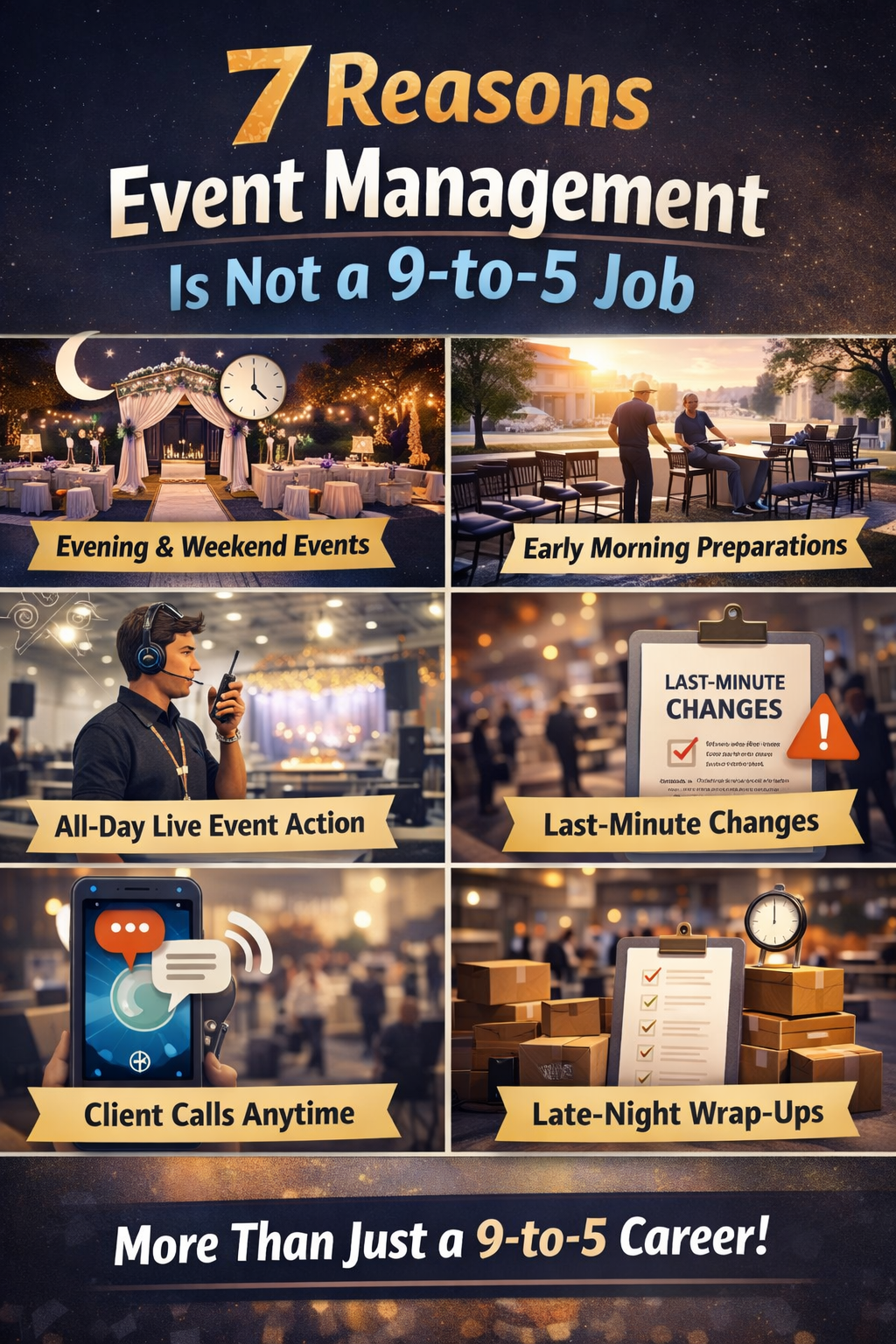
This skill is especially important because event management is not a 9-to-5 job and requires flexibility and discipline.
An event involves multiple vendors—decorators, caterers, sound and lighting teams, photographers, logistics providers, and more. Coordinating all these stakeholders is a major responsibility of an event manager.
During the course, students master:
Vendor selection and negotiation
Team coordination and leadership
Communication between departments
Maintaining workflow during execution
This skill helps students understand how teamwork and coordination drive successful event outcomes.
Creativity must always align with budgets. An event management course teaches students how to plan and manage event finances efficiently.
You’ll learn:
Budget preparation and breakdowns
Cost control strategies
Vendor rate negotiation
Avoiding unnecessary expenses
This skill ensures profitability for businesses and cost-effectiveness for clients, making it essential for both job roles and entrepreneurship.
No event goes exactly as planned. Weather changes, technical issues, vendor delays, or last-minute client demands are common challenges in the event industry.
An event management course trains students to:
Stay calm under pressure
Think quickly and make decisions
Handle emergencies and unexpected situations
Create backup plans
Crisis management skills help professionals maintain control and deliver successful events despite challenges.
Creativity is at the heart of event management. From décor styling and theme creation to stage design and ambience planning, creativity plays a key role in enhancing guest experience.
During the course, students develop:
Visual and aesthetic sense
Understanding of color palettes and textures
Décor trends and styling techniques
Creative storytelling through events
This skill allows students to design events that are visually appealing and emotionally engaging.
Planning is important, but execution defines success. Event management courses emphasize live practical training where students work on real events.
You’ll master:
On-site coordination and supervision
Team leadership and task delegation
Vendor management during live events
Real-time problem solving
This hands-on experience builds confidence, leadership skills, and the ability to manage high-pressure environments.
In event management course, small details make a big difference. Guest comfort, décor placement, lighting, timings, and flow all contribute to the overall experience.
Students are trained to:
Observe and manage minute details
Ensure quality control at every stage
Deliver consistency in execution
Enhance guest satisfaction
This skill separates average events from exceptional ones.
An event management course doesn’t just teach skills—it shapes your attitude. Professionalism and ethics are essential for long-term success in the industry.
You’ll learn:
Discipline and responsibility
Teamwork and adaptability
Punctuality and commitment
Respect for clients, vendors, and colleagues
These qualities define reliable and respected event professionals.
The event industry values experience, execution, and attitude more than theoretical knowledge. The skills gained during an event management course prepare students for:
Weddings and luxury events
Corporate conferences and exhibitions
Brand activations and live shows
Entrepreneurship and freelancing opportunities
With practical exposure and industry-oriented training, students become job-ready from day one.
An event management course is a complete professional transformation. It equips students with technical skills, creative abilities, leadership qualities, and real-world experience. The 10 skills you master during an event management course prepare you to handle the challenges, excitement, and opportunities of the event industry with confidence.
If you’re passionate about creativity, coordination, and live experiences, mastering these skills can open doors to a dynamic and rewarding career in event management.